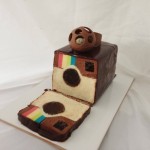
The Worlds First Hyper-Realistic Cake
The “Is it Cake” show on Netflix was preceded by hyper-realistic cakes on YouTube. But was that the real beginning, or does it go way, way further back?
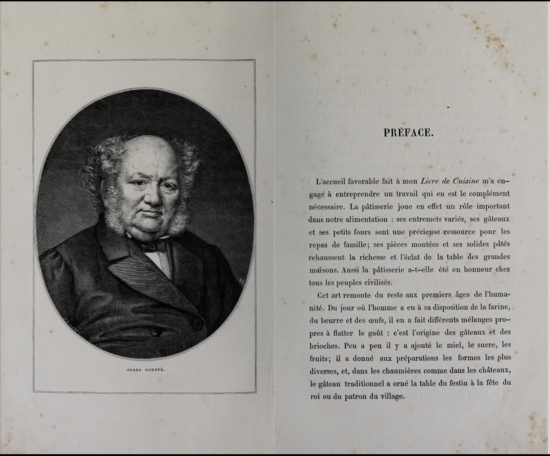
I found this recipe in a cookbook from 1873, Le livre de patisserie by Gouffé Jules.
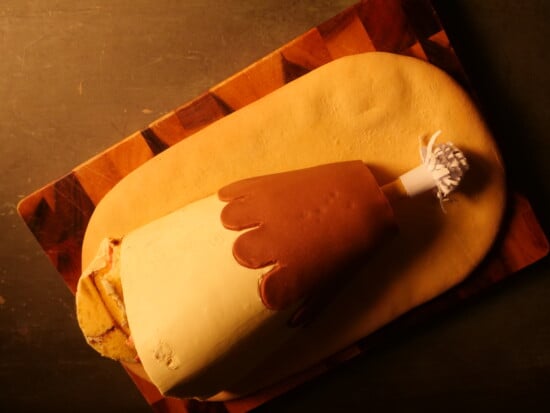
LENTEN HAM
These pastries are hardly ever made anymore: they’ve fallen out of fashion. However, it’s always good to know how to make them, and I think it’s worthwhile to include them in this book. Fifty years ago, they made the reputation of Mr. Legras, a pastry chef, whose establishment has disappeared, like most of the great houses that were flourishing at the beginning of the century.
Make a vanilla sponge cake in an oval mold.
Let it cool.
Trim it into the shape of a ham.
Cut open the top.
Hollow out the cake, leaving a thickness of 4 centimeters (1.57 inches).
Fill the cavity with a cooked chocolate cream. Remove the crumb from the top piece and place it over the cream.
Place the cake on a green-sugared pastry base. Attach a handle made of pastry paste and add a paper frill.
Shape the ham using very firm Chantilly cream. Form the rind using chocolate almond paste and Decorate the ham with a piping bag and pink or chocolate cream.
Set aside to serve.
In hot weather, when Chantilly cream is very difficult to obtain, it can be replaced with Italian meringue.
glaze, which is set in the oven without allowing the piece to brown.
These pieces are also placed on small pastry bases. Arrange them on a platter and surround them with croûtons and chopped orange jelly.
To make a medium-sized sponge cake, use:
1 kilogram (2.2 pounds) of sugar,
A small pinch of salt,
20 eggs,
250 grams (8.82 ounces) of potato starch,
250 grams (8.82 ounces) of fine wheat flour (*gruau*),
50 grams (1.76 ounces) of vanilla sugar.
Separate the egg whites from the yolks.
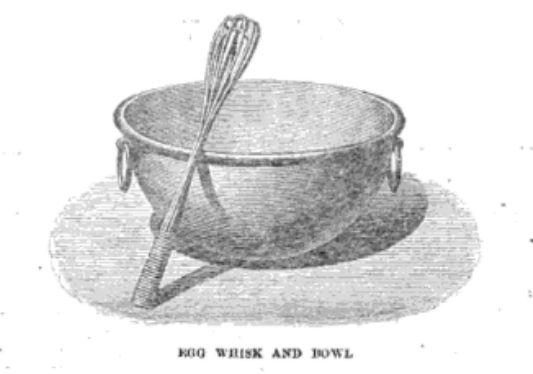
Place the whites in the mixing bowl and the yolks in a separate bowl.
Add the sugar and vanilla sugar to the yolks.
Work the mixture with a spatula.
Whisk the egg whites.
Fold the whites into the yolks.
Then mix in the flour and starch.
Attach a 5-centimeter-high strip of paper around the top of the mold. Fill the mold completely.
Bake in an oven set to a “dark yellow paper” heat (moderate heat).
Bake for 2 hours.
To check for doneness, remove the cake from the oven and press lightly on it. If the cake springs back and feels elastic, unmold it onto a wire rack. If not, return the cake to the oven.
You can also check doneness by inserting a large knife into the cake: if there is no moisture on the blade when removed, it is ready to be unmolded.
Once the cake has cooled, trim off any parts that rose above the rim of the mold to obtain a cake with a uniform glaze. I learned this method from my brother, Alphonse Gonflé, for whom it always worked well.
Note. — My colleagues may be surprised that, contrary to established wisdom, I use only 250 grams (8.82 ounces) of flour for every 500 grams (17.64 ounces) of sugar. They should bear in mind that it is the sugar, not the flour, that dries out the batter. Experience has shown me that the more flour one uses, the harder the biscuit is to dry out properly. By following the method I describe, I have obtained biscuits that are finer in appearance and superior in quality.
PASTRY CREAM KNOWN AS FRANGIPANE.
200 grams (7.05 ounces) flour,
4 whole eggs,
6 egg yolks,
1 liter (0.26 gallons) milk,
60 grams (2.12 ounces) of butter,
100 grams (3.53 ounces) of powdered sugar.
A small pinch of salt.
Place the eggs, egg yolks, flour, and sugar in a saucepan.
Mix everything together using a wooden spoon.
Once combined, gradually add the milk.
Stir until perfectly smooth, ensuring no lumps form.
Add the butter and salt, and place over the heat, stirring constantly.
Once the cream begins to thicken, continue stirring for 25 minutes to prevent it from sticking to the pan.
If the cream becomes too stiff, add 1 deciliter of milk and cook for another 5 minutes.
Allow to cool, stirring occasionally to prevent a skin from forming on the surface.
Cover with a piece of buttered paper.
PÂTE D’OFFICE.
1.5 kg (3.31 pounds) flour,
750 g (26.46 ounces) sugar,
375 g (13.23 ounces) water.
Dissolve the sugar in the water over the heat.
Mix with the flour.
Work the mixture until smooth.
Chill until ready to use.
Pâte d’office can also be made with eggs.
Replace the water with 9 eggs.
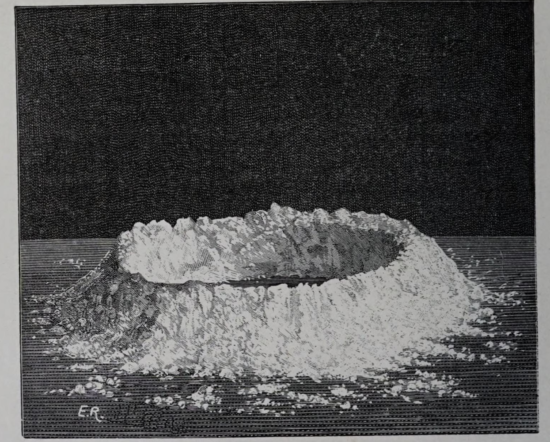
Place the flour on the work surface.
Make a well in the center.
Place the sugar in the well.
Mix the eggs, sugar, and flour together.
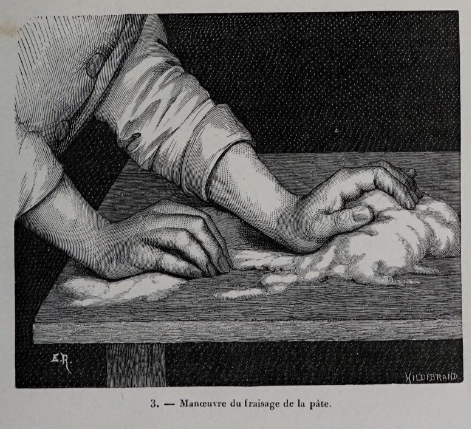
Bring the dough together and *fraise* (smear) it three times.
Keep cool.
ALMOND PASTE FOR SHEETS.
Blanch 475 grams (16.76 ounces) of sweet almonds and 25 grams (0.88 ounces) of bitter almonds.
Let them soak for 2 hours.
Drain and pound them with the juice of half a lemon.
Pass through a fine sieve.
Place the almonds in a mixing bowl.
Add 500 grams (17.64 ounces) of powdered sugar and one egg white.
Mix thoroughly.
Dry out over low heat, stirring with a spatula.
Prevent the almonds from sticking to the bottom of the bowl. You can tell the paste is sufficiently dried when it does not stick to your finger upon touch.
Remove from the heat and spread the paste onto a marble slab.
Stir with the spatula so it cools evenly.
Add 5 grams (0.18 ounces) of gum tragacanth; this small amount of gum does not compromise quality and makes the work much easier.
Dissolve the gum in water.
Grind it and incorporate the pounded almonds.
Place the mixture in a bowl.
When ready to use, incorporate powdered sugar (see Vocabulary).
ALMOND PASTE FOR CENTERPIECES.
Soak 500 grams (17.64 ounces) of almonds for 15 hours.
Blanch them.
Wash thoroughly.
Dry the almonds with a cloth.
Pound them dry and pass them through a fine sieve.
Once the almonds have been sifted, take 40 grams (1.41 ounces) of top-quality gum tragacanth and dissolve it in a quarter of a deciliter of water.
Strain the gum through a coarse cloth and work it with the palm of your hand on a very clean marble surface.
Gradually mix in 500 grams (17.64 ounces) of powdered sugar.
Once the gum is worked smooth, mix in the almonds in small batches.
Add another 500 grams (17.64 ounces) of powdered sugar.
Mix well.
Store in a bowl covered with a damp cloth and place in a cool spot.
When ready to use, incorporate more powdered sugar as needed and color as desired.
This paste, while less white than *pastillage*, is far more translucent; it takes color much better, allowing for shades that are more brilliant and vivid than those achieved with *pastillage*.
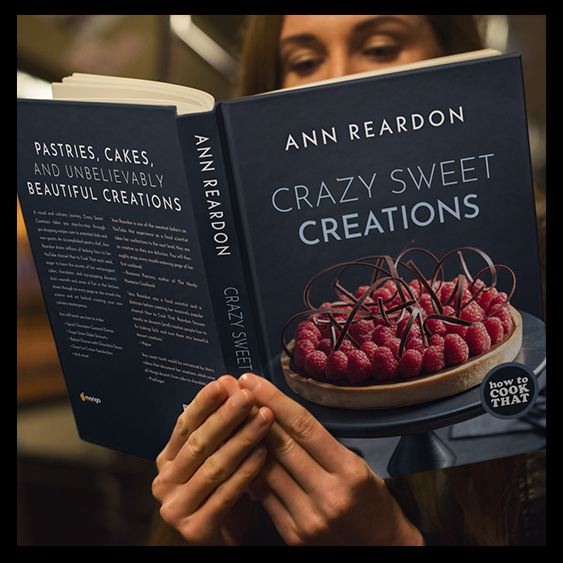
My Cookbook
Stores that sell my book listed by country:
http://bit.ly/ARcookbook
All recipe quantities in the book are in grams, ounces and cups.